The Story
Founded in 1866: The Quest for the Perfect Well
Kikunosato Shuzo was established in 1866 (Keio 2), originally operating under the name "Hachiryusha." The founder, Toemon Akutsu, wandered in search of the highest quality water before finally digging a well in Otawara, where the brewery stands today. Utilizing the abundant sub-surface waters of the Naka River and the natural blessings of the Nasunogahara plains—a region where rice cultivation has flourished since antiquity—we continue to craft exceptional Japanese sake.
A Land of Ancient Heritage: Nasunogahara
The Nasunogahara region, including Otawara City, has been a gateway for cultural exchange since ancient times, attracting envoys from mainland Asia. Known as a "Village of Burial Mounds," it is home to numerous historical treasures such as the Samuraizuka Kofun and the Nasu no Kuni no Miyatsuko no Hi (one of Japan's three ancient steles).
This fertile land is not only rich in history but also a powerhouse of agriculture. Beyond its historic rice paddies, the region excels in producing chili peppers, blueberries, strawberries (Tochiotome), and livestock. Rooted in the legends of the famous samurai archer Nasu no Yoichi, Kikunosato Shuzo thrives at the intersection of heroic history and agricultural abundance.
The Sake
the Quest for Pure Water
On October 1, 1866 (the twilight of the Edo period), Kikunosato Shuzo was founded by Toemon Akutsu at its current location. Originally named "Hachiryusha," the brewery began when Toemon, in his relentless search for the finest water, successfully dug a well on this very site to begin his brewing legacy.
War-time Interruption and Post-war Rebirth
The brewery produced early brands such as "Ichiryu" and "Kimi no Tomo." However, production was forcibly suspended in 1942 due to the government’s Corporate Reorganization Order during World War II.
The brewery finally saw a revival in 1955. The following year, it was re-established as a corporation and renamed "Kikunosato Shuzo" (Chrysanthemum Village Brewery), inspired by the area’s history as a prominent producer of edible chrysanthemums. Following the restart, production grew steadily, reaching a peak of approximately 2,000 koku (approx. 360,000 liters) in the 1970s under the third-generation head, Kanzo Akutsu.
The Descent: From Peak to the Smallest Brewery in Tochigi
From 1985 onward, the termination of contracts with major national breweries led to a sharp decline in production. The brewery was forced to scale back, supplying only local ryokans, wedding halls, and tourist spots. By 2002, production plummeted to just 100 koku, making it the smallest brewery in Tochigi Prefecture at the time—a critical "rock bottom" that eventually set the stage for its modern transformation.
The Sake
The Bold Vision of Shin Akutsu
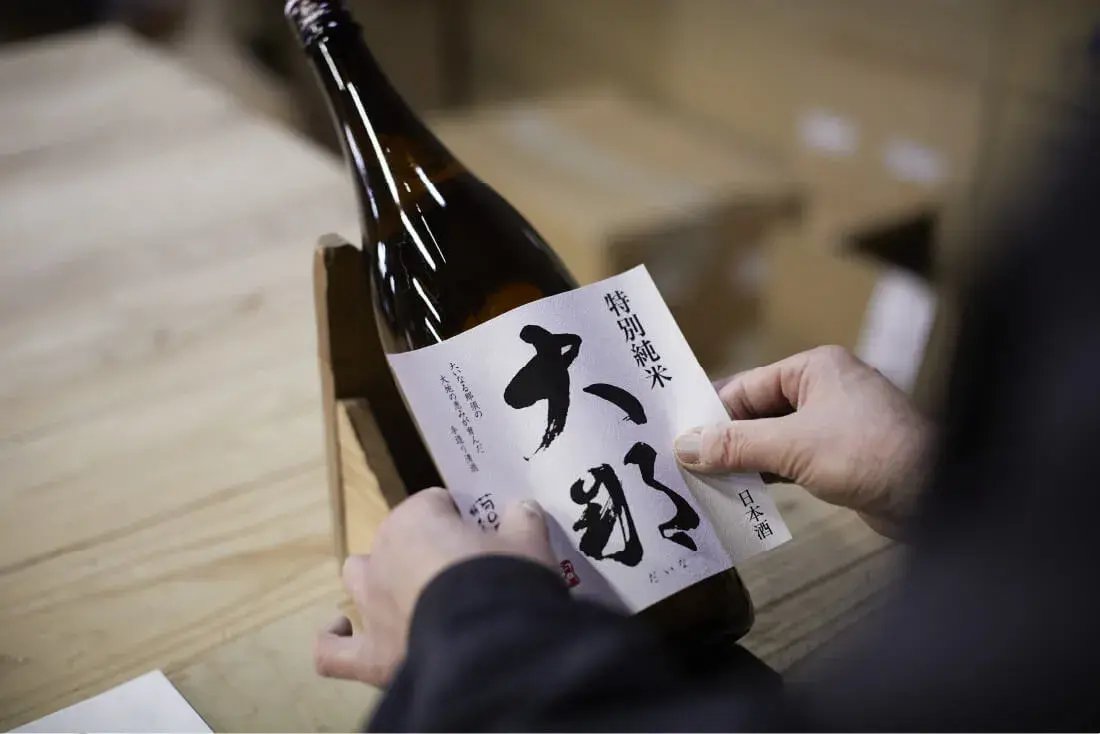
In the midst of a critical crisis, the 8th-generation head, Shin Akutsu, took the helm. Determined to save the family legacy, he decided to launch a new brand. After seeking guidance from industry peers and specialty retailers, "Daina" was born and officially trademarked in 2004. The beginning was far from smooth; due to a severe lack of capital, the initial production was a mere 20 koku (approx. 3,600 liters). Even after full production began in 2006, the brewery struggled under the weight of debt and high equipment costs.
The Turning Point: danchu Magazine and the Gold Medal Triumph
The year 2009 marked a decisive turning point. Following a recommendation from a long-time partner retailer in Tokyo, Daina was featured in the prestigious food and drink magazine, "danchu." This exposure catapulted the brand into the spotlight. Riding the wave of a growing national sake boom, sales soared. This influx of capital allowed for vital equipment upgrades, leading to enhanced quality and consistency. Finally, in 2010, Daina achieved the ultimate validation: its first Gold Medal at the National New Sake Appraisal, marking the triumphant rebirth of the brewery.
From Kikunosato Shuzo
This message is displayed because you did not provided both a filter and a template to use.